
How Many Home Loans Can You Have?
Having a stable real estate portfolio is a common dream for ambitious property purchasers. After you start acquiring homes and purchase your main property, you may start wondering about the upper limit of your capability to borrow money. We get such questions often at our mortgage brokerage service at BrickWood Mortgage.
Clients who successfully purchased their primary residences come to us ready to invest in vacation or investment properties but want to find out their limitations, including options such as an FHA home loan in South Carolina.
You can have multiple mortgages. Of course, in practice, there are some lender policies and federal guidelines you have to abide by to take out another loan. At the same time, as mortgage brokers, we deal with similar situations each day, helping borrowers optimize their chances of getting approved for loans. In this article, we will explain mortgage restrictions in detail, discuss what lenders look for in multiple mortgage applications, and answer questions like…how many home loans can you have?
Types of Home Loans and Their Differences
To start talking about the possibility to have several mortgages, let us briefly discuss home loan types. Banks categorize the type of home loan you can take based on the purpose of using the property. So, you should know that your mortgage is either taken on your primary residence, second home, or on investment properties, which often leads borrowers to ask how many house loans can you have.
A primary residence is the property you live in the majority of the year. The loan taken on your primary residence typically has the lowest interest rate among all other mortgage types and often requires you to provide a smaller down payment. It also poses the smallest risk since you will pay the loan anyway as you need the roof over your head when facing financial difficulties.
A second home is a vacation property you may visit throughout the season, and an investment property is a house whose owner intends to generate revenue from renting it or selling the home later on. Such mortgages are considered riskiest from lenders’ perspective, so they may require you to provide extra funds.

Rules Regarding Taking Out Multiple Mortgages
When asking how many mortgages can you get and how many mortgages you can afford, we recommend checking out the current Fannie Mae’s rules about the limit of financed properties you can possess. As of now, there is no restriction on the number of mortgages you can take out. In fact, under current guidelines, one borrower may have up to ten mortgages.
Of course, getting the ten properties does not necessarily mean taking loans on all of them in the nearest future. Firstly, your application for loans one through four is quite safe as you do not meet any additional requirements other than those applied to your main mortgage. However, things change dramatically when applying for loans five through ten.
Keep in mind, in addition to Fannie Mae’s rules, individual banks can also establish their own policy concerning the limit of mortgage amounts per client. Such lender requirements are called overlays. For example, while Fannie Mae allows up to ten loans per borrower, a particular bank may only lend up to four mortgages.
Conditions Required for Obtaining Multiple Mortgages
Qualification criteria for obtaining multiple loans include having great credit ratings, meeting the required debt-to-income ratio, and possessing enough cash reserves. Let’s elaborate on these aspects.
Credit Ratings
To receive additional mortgage, you have to have an excellent credit rating. For mortgages number five through ten, it should exceed seven hundred twenty points. In case you plan on taking out several loans, we recommend you to actively monitor and maintain your credit score.
Debt-to-Income Ratio
The DTI is calculated based on your gross monthly income and debts. If you want to have a stable debt-to-income ratio, it should not exceed forty-five percent. However, we suggest aiming for a ratio of thirty-six percent or even lower. We can calculate projected rental income and show you how to compensate mortgage payments with it.
Cash Reserves
Another factor to consider in obtaining multiple mortgages is your liquid cash reserves. Banks want to see evidence that you still have enough funds to pay your mortgages, even if your investment property stays empty or requires repair. The larger amount of your cash reserves, the easier it will be to prove your ability to pay your mortgage.
FAQs About Multiple Mortgage Limits
SHOULD I MAKE A DOWN PAYMENT GREATER THAN FOR MY MAIN MORTGAGE?
To obtain additional mortgages, lenders may require you to provide additional down payments. For your first residence, you may borrow with three percent down payment. However, for investment properties, it equals twenty percent and for loans five through ten, you might put down even more – around twenty-five percent.
HOW ABOUT USING MY SPOUSE’S INCOME TO INCREASE PROPERTY LIMIT?
In case you and your spouse both earn well and have excellent credit scores, you may obtain separate mortgages on different properties. In this way, you can significantly expand the number of properties under your name. We can review your financial situation and decide whether this strategy will work for you or not.
WILL HAVING MANY MORTGAGES AFFECT MY CREDIT SCORE?
Any kind of debt has a negative impact on your credit rating initially. However, after a period of time, it stabilizes if you regularly pay back all your obligations. Moreover, in this way, you may demonstrate to future creditors your financial reliability.
Planning Your Next Property Acquisition with Us
How many mortgage loans can you have? Now you know. Expanding your real estate portfolio to more than one house requires effort, discipline, and knowledge of lenders’ mortgage restrictions. Getting additional homes to own is an exciting thing but not everyone knows how to accomplish this goal successfully.
Our mortgage brokers at BrickWood Mortgage are happy to help you strategize and develop a plan to expand your real estate portfolio. Our task is to evaluate your financial picture, find appropriate lenders, and optimize your loan applications. Contact us to learn more about obtaining additional homes and mortgages!
Can I Refinance My Mortgage with a Bank Statement Loan?
Being a self-employed individual comes with a tremendous amount of freedom, but that freedom usually comes to a standstill when one goes to a conventional bank to seek a loan to refinance their home. They could be running a successful business and generating tremendous cash flow, but their taxes could be different. This creates a problem for self-employed individuals who want to refinance their homes.
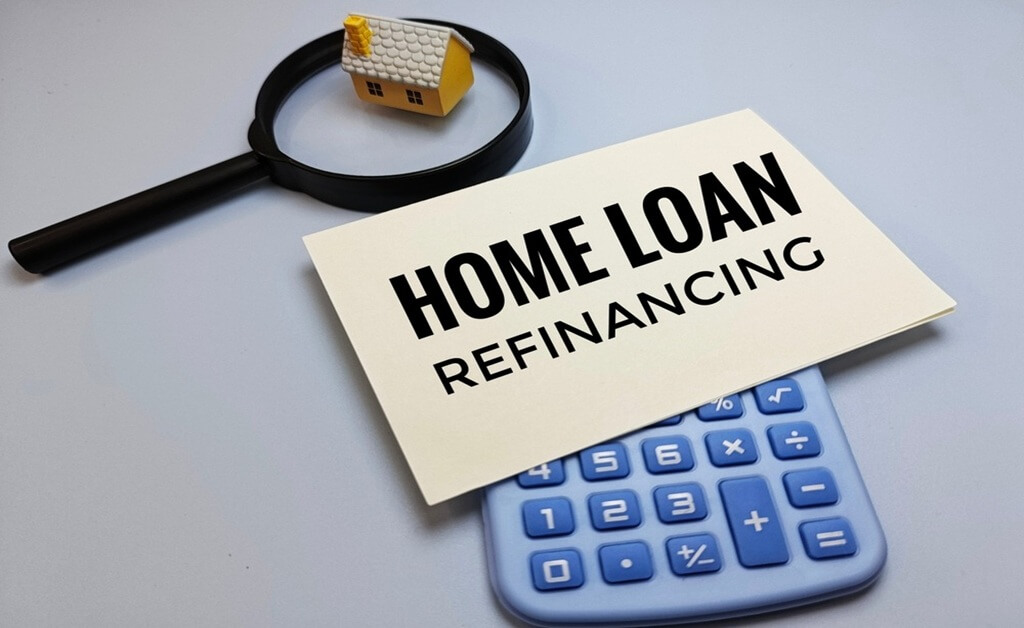
We know that your taxable income submitted in your tax return may not necessarily be your ability to repay a loan. However, there is a solution for businesspeople and freelancers like you. It’s called a bank statement loan, and the answer is yes, you can definitely use that for refinancing your existing home loan.
So, can I refinance my mortgage with a bank statement loan if traditional methods aren’t working for me? Let’s delve deeper into the topic!
What is a Bank Statement Loan?
A statement loan is considered a nonqualified mortgage and is also called a non-QM loan. The reason it is different from other loans is it does not require W-2s or tax returns as other loans do, as it allows income verification through bank statements instead. The reasoning behind this is quite simple. Lenders evaluate the money flowing into your accounts in order to assess your actual cash flow instead of your gross income after you have maximized your deductions.
This provides an avenue for businesspeople who have been denied access to refinance. If you have steady deposits and your accounts are in good standing at your bank, then you may qualify for this type of financing regardless of what your tax returns show.
In 2026, it’s critical to explore all your options because we’ve spoken to endless people unaware of what a bank statement loan or a reverse mortgage company in South Carolina can offer.
Who is This Approach For?
We witness a variety of customers using the bank statement loans service to upgrade their financial condition. This service is best suited for businesspeople, consultants, freelancers, gig economy workers, or simply for people who do not receive a regular payslip.
Our clients at BrickWood Mortgage are able to afford the monthly payments but are hurt by the traditional underwriting process that does not comprehend self-employment income. By changing the underwriting criteria to gross deposits, we are able to qualify our clients for the loan that corresponds with their income. Plus, if you are interested in tapping into your home’s equity, you might benefit from a bank statement mortgage refinance to achieve your financial goals.
Strategic Advantages of Refinancing
A bank statement refinance has the same benefits as the regular refinance option. The first reason people choose to refinance is to obtain a lower interest rate. Perhaps your credit score has increased since you bought your house, or perhaps the market interest rate is lower, and as such, you can save money by refinancing.
Another option that is quite popular is cash-out refinancing. You, as a business owner, may require funding for expanding your business, purchasing equipment, and even paying off debts that have high interest rates. Through cash-out refinancing, you can leverage the home equity that you have accumulated and get access to cash at closing.
What’s more, you may also want to revise the terms and conditions of your loan. You may want to change from an adjustable rate mortgage to a fixed rate mortgage and also opt to pay off your house sooner by reducing the term of your loan. For many, the best step forward is to refinance a bank statement loan when the time is right and their financial situation has improved.
How the Process Works
The procedure to apply for the bank statement loan is quite easy, although the required documents are not the same as in other loans. Instead of requiring tax returns, lenders will require bank statements for a certain period of time, usually between 12 and 24 months. Based on these statements, lenders will compute your average monthly income from your deposits.
Credit scores also continue to be a consideration in this process. Although requirements differ slightly, most lenders require a credit score of at least 600 to 620. Another consideration is loan-to-value ratio, also known as LTV. The loan-to-value ratio is a ratio of the loan to the value of the property as appraised. Typically, you’ll be required to have some equity in your home in order to refinance your loan, especially if you want a cash-out refinance loan.
Is This the Right Move for You?
If you are fed up with hearing “no” from traditional lenders based on your tax returns, it’s time to look for other alternatives. We are here as a mortgage broker to assist you in understanding the non-QM market and help you secure a loan structure that takes your success as an entrepreneur into account!
4 Effective Tips to Save Money for a Down Payment
Buying your first home is an exhilarating experience, but saving for the down payment on the property can be overwhelming for many individuals. With rising costs of homes, it is no wonder that saving for the down payment is an arduous endeavor for many who have multiple priorities for their money. The bright side is that with the right guidance, reaching your down payment savings goal sooner rather than later is possible for many individuals.

1. Make a Budget and Track Expenditure
Keeping tabs on where your money is going each month is the key to any successful savings strategy. You can begin by looking over your bank statements to determine where your spending falls into two categories: necessary expenses versus discretionary spending.
After gaining an understanding, set up a budget that reflects saving for your down payment on the property. There are costs that can be reduced so that the budget is useful in meeting your goal without requiring much in terms of quality life expenses.
2. Create a Savings Goal and Schedule Transfers
Having something specific in mind makes saving more attainable. Look up the average price for homes in the area where you want to buy, then save for a down payment accordingly. Typically, down payments for conventional loans range from 3% to 20%, with some options for first-time buyers requiring fewer down payments.
After determining your goal, make saving an automatic process by setting up an automatic transfer from your checking account to a savings account each pay day. By doing so, since the funds are being forwarded before you actually have a chance to spend them, essentially, you’re paying yourself first, thus avoiding any temptation to forego saving for one month.
3. Remove Wasteful Expenses and Look for Ways to Cut Costs
Take a closer look at your subscription services. That streaming service or gym membership that you barely use could also be utilized for contributions to your down payment fund. Think of other ways to save money on things such as your cable subscription, cell phone service, or even your daily coffee trip.
In addition to looking for ways to cut expenses, look for ways to stretch your budget even further. Cook at home instead of dining out, buy generic brands at the grocery store, and look for free entertainment in your community. You could also look at putting off expensive hobbies or vacation ideas until you reach your savings goal.
4. Research Down Payment Assistance Programs and Grants
You do not need to save for the down payment by yourself. There are many state and local governments that offer down payment assistance programs for first-time buyers in particular. They offer either grants, low-interest loans, or even forgivable loans that do not need to be repaid if the borrower lives in the purchased property for a certain number of years.
To start, look for programs in your state or city. Programs may be offered by your employer or housing authority as well. Some down payment assistance programs restrict their benefits to low-income individuals, while others allow all first-time buyers to participate. Utilizing these sources could greatly aid in alleviating the burden of saving for down payment expenses.
Bonus: Talk to a Mortgage Broker Early
At this point, before you embark on your savings adventure, it’s helpful to speak to our mortgage brokers at BrickWood Mortgage. We can assist in further understanding exactly what it is that you need in terms of saving, depending on your financial status as well as which type of mortgage you qualify for. There is also the aspect of avoiding pitfalls that a broker could assist with that you might never have thought of on your own.
Start Saving Today
Saving for a down payment requires discipline, but it can actually be done. By budgeting, saving money in an automatic manner, eliminating expenses that no longer make sense, and possibly finding down payment assistance, a down payment on an apartment can be achieved, effectively unlocking the key to the front door in your new apartment!
Eric Gray – FAA Commercial Drone Pilot
We’d like to Congratulate Eric Gray, as the newest FAA Commercial Drone Pilot on the Grandstrand! Contact Graycrest Realty for all your Drone for Hire needs.





 © 2007-2026 Brickwood Mortgage Inc. All Rights Reserved.